The Sensualists
We sit at banquet of human culture, never-ending abundance which grows and grows and grows at a scale beyond any human comprehension. Behind us lies centuries of human thought and expression, and in front of us the table overflows with new tasty delights. You could eat just grapes and never be done for a thousand lifetimes. So spoilt for choice, the line between gorging yourself dead and starving from indecision isn’t too different. A variety of social media line the platter: perhaps some YouTube shorts might take your fancy. I hear you’ve restricted your intake of Instagram reels, is that right? What about a new TV show? That’s high culture. It’s good to exercise your focus on occasion, I find 20-minute episodes perfect - not too strenuous! Then there are movies, music, video games, books, and comics. There are functionally infinite stuff to pick at, and we are left with the tyranny of choice.
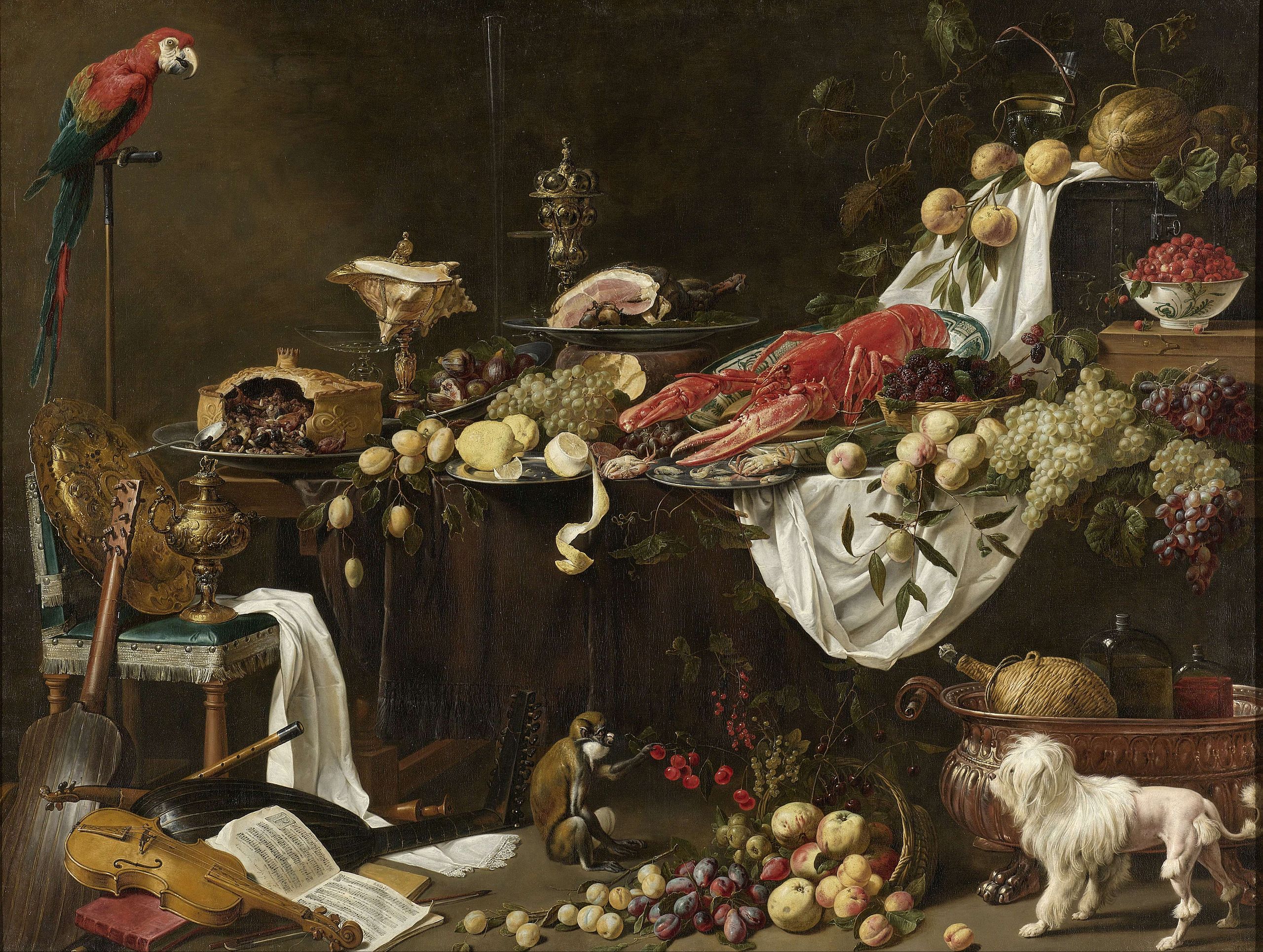
Pronkstilleven, Adriaen van Utrecht, 1644
What then to choose? The first instict is to cut out the malignant time-sink that is social media and short-form content. An assertion as convincing as “I will stop smoking!”. Smoking makes you crave nicotine, the joy of smoking is an entirely manufactured one borne from the temporary satisfaction of this craving. Although I would contend the oral fixation is very real. The doom-scroll of social media isn’t too different, trying it once is enough to set into motion an awful cycle of dependence. I will also suggest a sort of childlike thumb/finger fixation is engaged when scrolling the screen. The memes whilst fun, and an increasingly normalised means of communication, are so obviously bad for your brain. WAKE UP PEOPLE, brainrot doesn’t just get coined out of nowhere, I can literally feel it.
So, to reject our modern super-charged-brainrot, I suggest turning to the much tamer brain rots of yesteryear. The book, the film, the essay, the poem, and for dessert the TV show or video game. All available through the internet.
The progenitors of the internet thought of it as an information superhighway. It was to connect universities, research centres, the military. Its technological infrastructure was built with the future in mind, it had to flex with demand allowing for virtually infinite expansion. Just in case. Of course, today’s reality would satisfy even the more ambitious sci-fi writers of the pre-Internet age. The sheer scale of interconnectivity that the world now takes for granted is absurd. Connected with your peers and unfathomable pools of content. The world is at your fingertips, sure; really what we have access to is worlds plural.
Worlds are at your fingertips, should you let them. This is what separates the moralist from the sensualist. The moralist will follow the letter of the law. They will stop at the red light on their bike on an empty 5 am road. They will input 6 bananas on the self-checkout, when they could have easily told it 4 or 5. They subscribe to several streaming services, and have a TV licence that’s not actually their parent’s. In bits and pieces the moralist is you, and it is me. (Although I’m at big risk of conflating the moralist for a stickler… oh well). We all have lines in the sand we refuse to cross, or cross all too easily. Their distinctions may be self-contradictory, flawed in their logic - but they are borne of our values and upbringing. I refuse to shoplift, but contradict myself when I fudge my banana count to save 16p. Perhaps it’s the scale of the theft, but importantly it’s the gut feeling within oneself that whilst they have acted illegally, they haven’t violated their internal ethics. You might rationalise it: “that banana claws back against the price gouging, so really we’re even.” or simply “they’ve already profited off of me enough”.
The Internet moralist acts with great discretion, above board at all times possible. They submit to an internet subsumed - as everything is - into a hypercapitalist reality, and so at every turn some obstacle appears. Advertisements and paywalls, obstructions and disruptions designed to alleviate you from your capital, supremely by wasting your time. The moralist is patient, they don’t block ads, they sit through them. They aren’t desperate to change this of course, cyberspace only mirrors urbanspace’s own ubiquity of ads, and so they accept this normalcy without protest. You might owe it to the creators, and the websites, to create those ad impressions; Profit by a thousand cuts. Yet advertising is insipid, and we shouldn’t relent to its ubiquity. There are other ways to contribute to creativity. I’d argue that the advertisement industry, all its billions in revenue, is of course, the ultimate sham industry, but not now. The moralist is really experiencing an entirely different landscape. If an article is paywalled the moralist concedes defeat, they lament that they ever desired what’s withheld from them, or they pay up. Equally, if the movie they heard lots about isn’t on any streaming platforms they subscribe to, they find themselves restricted once more. Their access to culture is policed by walls and barricades, not only expensive to manoeuvre around but sometimes impossible, above ground. You should contribute to art and creatives, but we only have one short life and should we spend even a millisecond of it watching adverts? Should we refrain from reading books of long-dead authors because we haven’t gone through the legal channels?
The internet sensualist sees all the worldly potential of the internet and engages it without restraint. They feast upon the ultimate pleasure of the 21st century, that is, information, without afterthought as to where at the banquet they are even permitted. Although they flit the rules, it doesn’t make them badass or rebellious, just single-minded in their consumption. They also aren’t necessarily selfish if they contribute within their means. Who is entitled to the world’s culture? Who gets to eat at the banquet? Aaron Swartz asks this in his Guerrilla Open Access Manifesto. Should those in the global South or those in poverty simply not have access to the world’s culture because the access isn’t there? It makes no sense to restrict them.
This is most pertinent in the realm of academia. The realm of most desperately guarded secrets and knowledge. It is said that academics write for academics, and this is doubly true. Their language firstly excludes, they communicate in riddles and jargon. Secondly, without institutional access, it is practically impossible to read the vast majority of research. The Open Access movement only makes a small dint in the sum of academic knowledge. When confronted with a desire but lacking privileged access (or when said access fails anyway) all you can turn to are to Shadow Libraries like Anna’s. Refuse to and you concede that you don’t deserve this access. The underground fight for preservation and access is important, and so naturally repressed by those who seek to profit from division and exclusion of knowledge. We pay thousands for a degree, and so much of its value is tied up in this access to knowledge, when it needn’t be. The printing press took literature out of the monasteries and into the people’s hands. The internet demonstrates a similar revolutionary impulse. When information can pass from peer to peer à la dēmokratía (torrenting and P2P networking), what right do the publisher cartels have to extort such profit? It must be made clear that the internet cannot be effectively policed, it’s a game of infinite moles and finite mallets. Yet governments, multinationals, and institutions seek at all cost to uphold copyright. Anti-piracy means one thing only, the infringement of your own digital freedom and privacy, so often under the guise of child safety.
Consume and create as much as you can. Make sure it’s consumption that broadens your outlook, rather than narrowing it. Contribute as much as you can to the creation of the culture you think is important. Ultimately, don’t feel guilty about consuming something without permission; this is your only life, why limit it? It’s much too short to be a moralist.
Shit this blog became an incoherent sermon…
- Z 8 July 2025